
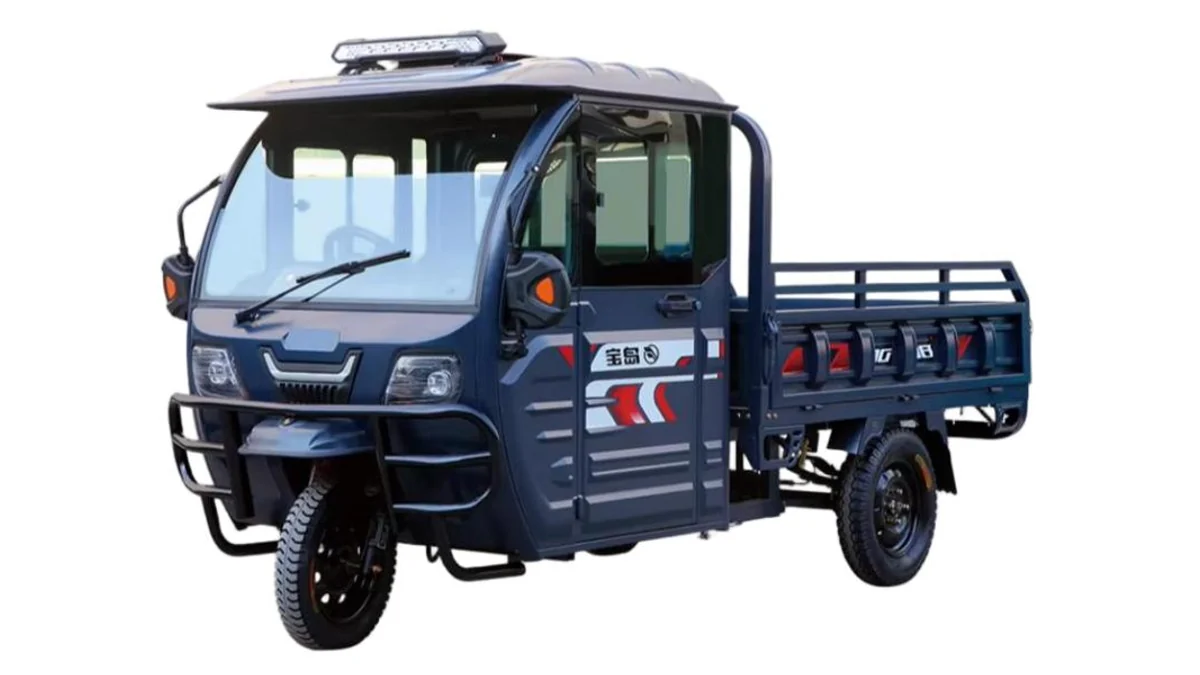
In March 2026, BODO published the SL010 in its international electric-tricycle catalog and updated the product record in April. The record identifies the SL010 as an electric tricycle for cargo transport. Its product image shows an enclosed front cab, an open rear cargo bed, and visible brand marking.
Those details establish product identity and visible body form. They do not establish the exact configuration a buyer will receive. The publication and update dates are catalog dates, not proof of a production launch, certification milestone, first sale, or availability in every export market.
For a European urban-delivery importer narrowing one cargo-tricycle candidate, the practical next step is a destination-specific evidence brief. The regional scenario helps define questions about routes, charging, packing, and documents; it does not imply European approval, representation, road legality, or suitability.
Freeze the identity before discussing options
Start the request with the exact catalog name, the SL010 model reference, the intended destination, and the planned use. Describe the operation rather than guessing a specification: parcel delivery, shop replenishment, private-site logistics, or another clearly bounded task. Add the expected route surface, stop frequency, working hours, charging access, and the type of goods under consideration.
Then ask BODO sales to identify the exact export variant being quoted. The reply should state the current model code and configuration date. If several variants share the SL010 name, each one needs a separate row in the comparison file. This prevents a photo from one version, a technical sheet from another, and a price from a third from becoming one misleading package.
The site's urban cargo quote option provides a useful commercial starting point, but the quote still needs evidence tied to the actual unit.
Request current configuration evidence
Ask for a complete technical sheet for the quoted variant, including dimensions, energy setup, charger, controls, tires, brakes, and other components that affect local evaluation. These are questions, not claims taken from the catalog.
Current media should accompany the sheet:
- Front, rear, both sides, cab interior, cargo bed, and charging-area photos.
- Clear images of model, battery, charger, controller, and packing labels where applicable.
- A short video showing the quoted vehicle, its controls, lighting, forward and reverse movement, and charging connection.
- Color and accessory photos that match the written quotation.
The media date and variant name should appear in the file record. If the photos differ from the catalog image, the supplier should explain which visible details changed. The goal is not to demand that every unit look identical to a web image; it is to know which evidence belongs to the commercial offer.
Separate product evidence from export terms
A usable quotation should keep technical, commercial, and logistics fields distinct. Request the price basis, sample quantity, production timing, packing method, packed dimensions, loading estimate, spare-parts recommendation, and warranty process as current offer details. None should be inferred from the March-April listing.
Document scope also needs its own section. Ask for the names, issuing entities, applicable model or component references, and validity dates of any files offered with the quoted configuration. A document supplied for one battery, charger, or vehicle variant should not automatically be applied to another. The importer remains responsible for checking destination requirements with qualified local parties.
Buyers who still need to narrow several candidates can use the focused model-shortlist request before asking for a final SL010 package.
Build one comparison file
Record every answer in a simple table with four columns: requested field, supplier response, supporting file, and open decision. Use consistent units and keep blank cells visible. A blank value is more useful than an assumption because it shows what must be resolved before sampling.
Give each photo, video, technical sheet, packing file, and quotation a version date. When a revised offer arrives, preserve the earlier file and mark what changed. This makes it possible to compare the SL010 with another cargo candidate without pretending that similarly named fields describe equivalent hardware or support.
The Fast Quote Brief on the products page can help organize destination, model scope, file needs, and response timing before the email is sent.
Set a sample gate
Request one sample only after the exact variant, current media, technical sheet, export terms, packing evidence, parts proposal, and document scope are complete enough to review together. The decision should be explicit: proceed with the sample, request a revised quote, or pause the candidate.
That gate turns the SL010 catalog update into a controlled sourcing step. It keeps confirmed identity separate from unanswered performance and compliance questions, while giving BODO sales a compact file they can answer without relying on hidden assumptions.