
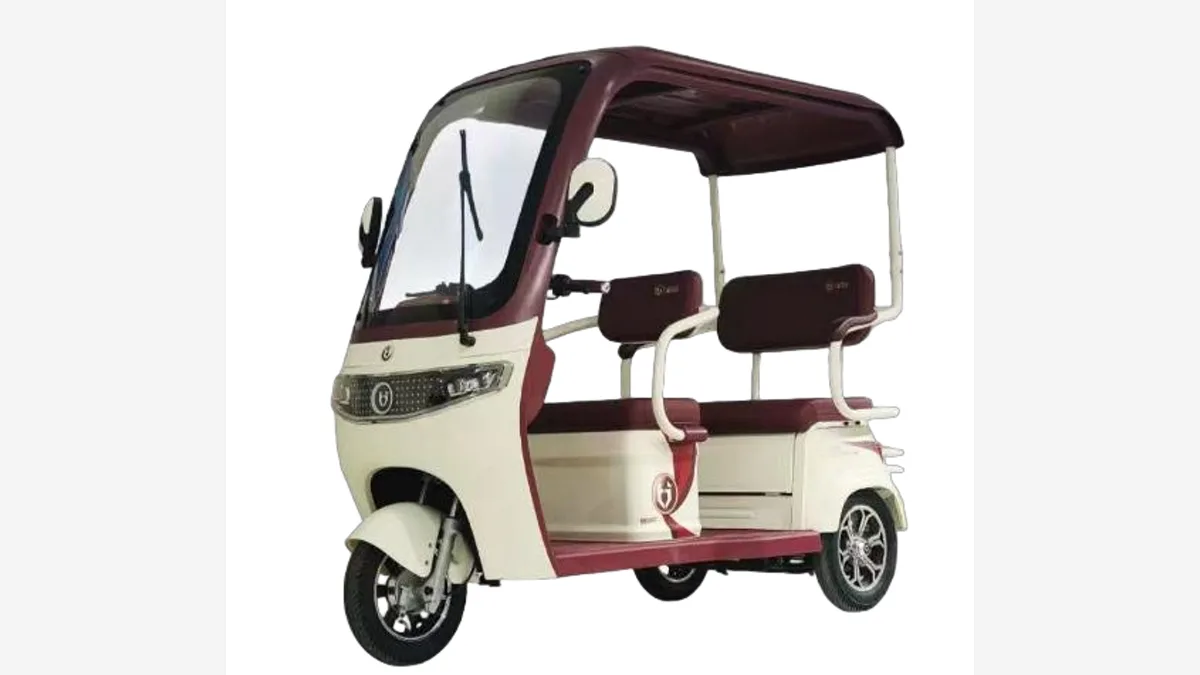
On April 2, 2026, BODO (Baodao Vehicle Industry Group, Tianjin) added two passenger-oriented models to the Electric Tricycles section of its official international export catalog: the BODO-SC05, an enclosed-canopy dual-seat model presented for family and urban mobility, and the BODO-MQ02, a compact mobility-style model positioned for elderly riders and light errands.
The buyer's conclusion should stay narrow: the passenger range is receiving attention, but the catalogue still needs to be checked against a current export specification.
That gap is where a fast-export decision can go wrong. A catalogue entry shows how the brand presents a model; it does not prove which configuration is available for a destination, what components ship in the quoted unit, or whether the required paperwork can be produced. Start with a written quote brief.
Start from the quotation stage, not the catalogue entry
Treat every statement in the two catalogue entries as a claim to be confirmed during quotation, not as a specification. The quote brief you send for the SC05 or MQ02 should demand, in writing:
- Current, dated photos of the exact configuration offered for export — the unit as it would ship, not a retouched catalog render.
- Written confirmation of wheel configuration. The MQ02 page presents an unresolved mismatch: the product image appears to show four wheels while the accompanying copy describes a three-wheeled vehicle. Do not guess which is authoritative and do not let the discrepancy slide past quotation — ask the seller to state, in writing, which configuration is being quoted and priced.
- A battery and motor specification sheet that matches the quoted unit, identified by the same model code and date as the quotation itself.
- Certification and test evidence relevant to your destination, naming the issuing body and the exact configuration covered.
- Commercial terms: minimum order quantity, lead time, packing method, payment stages, and the after-sales scope the seller will commit to in writing.
Buyers comparing the SC05, the MQ02, and other candidates at once can keep the shortlist narrow with a focused model-shortlist request before asking for full quotations. The same evidence-first discipline behind an earlier quote-ready brief for the SL010 applies here with one extra step: the wheel-configuration question for the MQ02 belongs in the first email, not the third.
A Gulf distributor's scenario
Consider a distributor in a Gulf market that supplies low-speed electric passenger vehicles to residential compounds, resorts, and community-mobility operators — an established use for sheltered, easy-entry passenger vehicles in the region. The SC05's enclosed canopy and dual seat fit the family-mobility brief; the MQ02's compact mobility-style format fits elderly users and short errands. Both match real demand conversations the distributor already has.
The temptation is speed: quote both, order a mixed container, and let the market decide. The safer version moves that speed to the information stage. The distributor sends one quote brief covering both models, asks for the five evidence items above, and holds the purchase decision until the answers arrive. If the SC05 documents come back complete while the MQ02 wheel question stays open, the trial order covers the SC05 alone and the MQ02 stays in the pending file. A clean file for one model beats a fast container containing one model and one question mark.
Sequence the trial before the container
Once the quotation answers are in, the SC05 or MQ02 should enter the same evidence path as any unverified model: a documented sample or small trial order, inspected against the quoted configuration on arrival, before container-scale volume. The trial-order export steps lay out that sequence — model confirmation, written terms, packing notes, and shipment communication — and a new catalog entry changes none of it.
Keep a dated evidence file for each model: the catalog page as first seen, the quotation and its attachments, the photos actually received, and the configuration confirmed in writing. When the seller updates a page or a component later, that file is what tells you whether the unit on the water is still the unit you evaluated.
The short version
BODO's April 2026 catalog addition gives importers two clearly positioned passenger models and a timely reason to talk to the seller. It does not give them a spec sheet, a confirmed configuration, or destination-ready paperwork. The importer who treats the catalog as the start of a quotation — and demands current photos, written wheel-configuration confirmation, a matched battery and motor sheet, certification evidence, and firm MOQ and lead-time terms — gets the fast export the lane promises. The one who treats the catalog as fact is simply ordering a question mark sooner.